Perforated Sleeve
Perforated Sleeve: Comprehensive Guide for Selection & Use
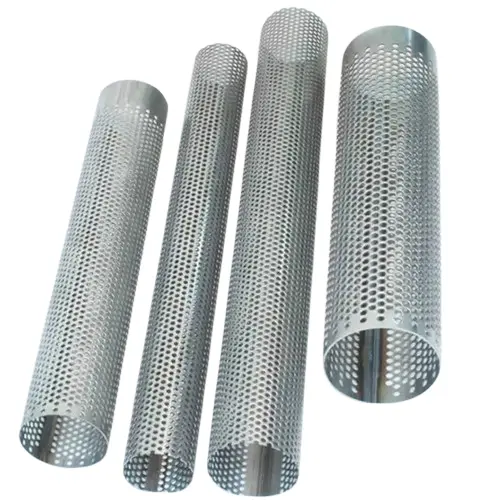
When you’re seeking a reliable method to anchor bolts or cables in hollow masonry, or looking for a sleeve solution that offers airflow or drainage, the term perforated sleeve comes into play. In this guide we’ll explore what a perforated sleeve is, how it works, where it’s used, the different types, selection criteria, installation best-practices, advantages and limitations, cost considerations, and help you decide whether it’s right for your project.
- Perforated sleeves are specialized anchoring accessories used primarily in construction to secure fixings in hollow or perforated masonry, ensuring reliable bonds through chemical resins.
- They come in plastic and metal variants, tailored for different hole sizes and load requirements, with research from industry leaders like Fischer and Sika highlighting their role in load distribution.
- Benefits include enhanced safety in void-filled materials, but selection depends on material type, depth, and environmental factors—always consult specs to avoid underperformance.
- Installation is straightforward but requires precision; common errors like incomplete cleaning can compromise strength.
What is a Perforated Sleeve?
A perforated sleeve is a cylindrical or tubular component (often plastic, nylon or metal) that has a series of holes (perforations) distributed around its body. It is generally used to accommodate a bolt, anchor rod or cable and to permit injection adhesive, resin or grout to flow through into the cavity behind the sleeve (in hollow bricks or blockwork), or to allow ventilation/drainage when used as a protective sleeve. For example:
In hollow masonry anchoring applications, a sleeve is inserted into the drilled hole; adhesive is injected into the sleeve and flows out through the perforations into the cavity of the masonry, enabling an anchoring system.
In cable protection or ventilation applications, a perforated nylon sleeve allows airflow or drainage while protecting cables or wires.
Thus, the “perforated sleeve” bridges the need for mechanical fixing and cavity penetration or airflow/drainage – giving it a dual functionality depending on context.
Why use a Perforated Sleeve?
Here are key reasons why a perforated sleeve can be the right choice:
Advantages
Effective anchoring in hollow or perforated blocks: With standard anchors, hollow masonry presents a challenge because there’s no solid mass behind the fixture. A perforated sleeve allows adhesive to expand into the void, producing a stable anchorage.
Controlled adhesive flow: The perforations act as controlled outlets for the resin or grout, helping ensure it spreads into the cavity rather than simply sitting in the hole.
Versatility of materials and dimensions: They are available in different diameters, lengths, and materials (plastic, nylon, metal) depending on application.
Ventilation or drainage when used for protective sleeves: In cable, pipe or wire protection uses, perforated nylon sleeves allow airflow and moisture escape, reducing heat- or humidity-related issues.
Ease of installation: Many products are designed with user-friendly features (e.g., caps, sleeves sized for common anchors) to streamline installation.
Limitations / considerations
Material strength and suitability: The base masonry or cavity must still meet structural requirements; a sleeve is only part of the anchoring system.
Cleaning of drilled hole is critical: Dust, debris or loose perforated brick elements can compromise adhesive flow. (Installation instructions reflect this)
Perforations create paths; must be sealed or designed properly: If not correctly used, adhesive may leak or not reach intended areas.
Cost vs. standard solid anchor: In situations where solid masonry is available, simpler systems may suffice and cost less.
A perforated sleeve is a solution when you have hollow or perforated masonry or need ventilation/drainage in protective sleeve contexts—but it’s not a blanket substitute for all anchoring or sleeve applications.
Common Types of Perforated Sleeves
Here’s a breakdown of types based on material, application, and geometry:
| Type | Material | Typical Use Case | Key Features |
|---|---|---|---|
| Plastic/Polypropylene Sleeve | Plastic | Hollow brick anchoring with injection adhesive | Lightweight; various diameters/lengths; often paired with cap or central ring. |
| Metal Perforated Sleeve | Steel, stainless steel, etc. | Heavy-duty anchoring in structural systems | Higher strength; suitable for rods or bolts under bigger loads. |
| Perforated Nylon Sleeve (Protective) | Nylon | Cable protection, ventilation, drainage | Flexible, abrasion resistant; perforations allow airflow/moisture egress. |
| Combination Systems | Plastic sleeve + adhesive + anchor rod | Hollow masonry fixings with specified load ratings | Owner/installer uses sleeve + adhesive + anchor system together. |
Selecting by size & geometry
When choosing a perforated sleeve, key geometry dimensions include:
Diameter of drill hole and the sleeve must match anchor rod size and substrate void.
Length of the sleeve: long enough to reach into the main body of the masonry or cavity to ensure effective adhesive spread. For example, one product list shows lengths like 50 mm, 85 mm, 130 mm for different diameters.
Perforation pattern & size: This affects how the adhesive exits the sleeve and spreads into the cavity or how airflow works in protective applications.
Material compatibility: Plastic vs metal vs nylon depending on load, environment (corrosion, temperature, chemical exposure). For example, nylon might absorb moisture (hygroscopic) and thus requires understanding of environment.
How to Install a Perforated Sleeve (Step-by-Step)
Here’s a typical installation process for a perforated sleeve in a hollow masonry anchoring scenario (experience-based, standardized by manufacturers):
- Drill the hole to the correct diameter and depth for the chosen anchor system and sleeve.
- Clean the hole thoroughly: blow out dust, brush detail or vacuum. A clean hole ensures adhesive bonds well.
- Insert the perforated sleeve into the hole. Ensure it is snug and reaches the correct depth.
- Inject the adhesive or resin into the sleeve using the anchor system’s recommended procedure. Typically you start from the bottom and work up. Some adhesives must extrude from the perforations, filling the borehole cavity behind the sleeve.
- Insert the anchor rod or bolt while the adhesive is still in open time. A rotational motion may be used. Some of the adhesive will exit the sleeve perforations into the cavity, creating a knuckle or flared anchoring mass.
- Allow adequate curing time as per adhesive manufacturer’s recommendations. After cure, apply loading as specified.
- Inspect the installation — check for correct depth, that the sleeve hasn’t shifted, correct anchorage depth, and no visible leakage in unsuitable ways.
Applications & Industry Use Cases
Here are some of the most common application scenarios:
Anchoring in hollow masonry or perforated brick
- Building facades, curtain-walls, curtain brackets, balcony rails, solar panel supports etc where substrate is hollow brick or block.
Cable or wire protection with ventilation/drainage
- In HVAC, electrical wiring runs, protective conduits in damp environments; here a perforated nylon sleeve lets moisture/heat escape while protecting the cable.
Heavy-duty structural fixings using metal sleeve systems
- For high loads or seismic zones, metal perforated sleeves may be used to ensure anchoring strength and durability.
Retrofitting and repairs
- When existing masonry has voids or cavities, using a perforated sleeve with injection adhesive allows for anchoring without needing to fill the cavity entirely first.
Choosing the Right Perforated Sleeve – Buying Checklist
When you are choosing a perforated sleeve or specifying one for a project, here are key parameters to check:
Material – plastic (suitable for general loads), metal (for higher loads/corrosion resistance), nylon (for protective/ventilation use).
Diameter & Length – ensure compatibility with anchor rod size, drill hole, and cavity geometry.
Perforation design – number, size and placement of holes affects adhesive flow or ventilation performance.
Compatibility with adhesive/anchor system – many sleeves are designed to be used with specific adhesives or anchor systems.
Load ratings – especially for structural anchoring: check certified performance reports, approvals, certificates.
Environmental suitability – consider temperature extremes, chemical exposure, corrosion, moisture. For nylon sleeves, note that “nylon is hygroscopic, meaning it absorbs moisture from the air” which must be considered in humid environments.
Ease of installation – some sleeves come with accessories like central ring caps, arrester clips (to prevent slipping into drill hole) etc.
Cost and logistics – evaluate package sizes, availability, lead-times, especially for large projects.
Comparison Table: Perforated vs Solid Sleeves / Standard Anchoring
Here’s a quick comparative view:
| Feature | Perforated Sleeve | Solid Sleeve or Standard Anchor |
|---|---|---|
| Use in hollow masonry | ✅ Yes, designed for cavities | ❌ Limited, unless first filled or specialized anchor |
| Adhesive flow into cavity | ✅ Via perforations | ❌ Limited or blocked |
| Ventilation/drainage for sleeve protection | ✅ If designed as protective sleeve | ❌ Usually sealed or closed |
| Installation complexity | Moderate – need correct sleeve & adhesive | Simpler for solid walls |
| Material cost | Slightly higher (specialized) | Often lower |
| Load potential (depends) | Good when specified | Good when substrate is solid |
| Flexibility (cable/ventilation) use | ✅ With nylon sleeve types | ❌ Usually rigid or closed |
This table helps you decide when a perforated sleeve is appropriate, and when a simpler anchor solution might suffice.
Frequently Asked Questions (FAQs)
A perforated sleeve has holes around its body that allow adhesive or resin to flow into the surrounding cavity (in masonry) or allow ventilation/drainage (in protective sleeve uses). A standard solid sleeve doesn’t have these holes and is less suited for hollow masonry or ventilation purposes.
Yes you can, but in solid concrete the main benefit (flow into cavity) is not needed. You might instead use a simpler system optimized for solid substrate, which may cost less and be easier. In hollow masonry the perforated sleeve gives distinct advantage.
You must consider the anchor rod diameter, the drill hole size, the depth of the cavity or block, the adhesive’s requirements, and any clearance needed behind the sleeve. Check manufacturer specification sheets for recommended sizes. For example, one product lists sizes like 12×50 mm, 16×85 mm, 16×130 mm, 20×85 mm, 20×130 mm.
Generally no. Once used with adhesive and cured anchor rods, the assembly is permanent. Even if removed, the sleeve may be damaged or contaminated with adhesive and not meet performance specs.
In this domain a perforated nylon sleeve may protect cable bundles or wires in installations where airflow, ventilation or drainage is required — for example, in HVAC systems, transportation systems, or industrial plant installations.
Look for manufacturer product data sheets, certificates of approval, test reports, load tables, and suitability for the substrate. For example, the manufacturer of an adhesive sleeve system says the sleeves are referenced in the corresponding approvals of each adhesive product.