Perforated Strainer
Perforated Strainer: What It Is, How It Works & How to Choose One
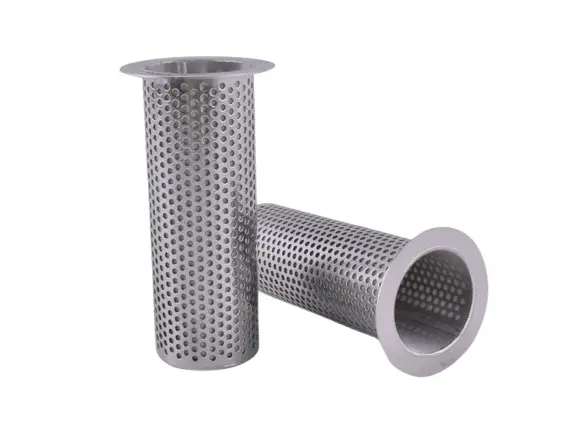
When it comes to separating solids from liquids or draining materials in a controlled way, the term perforated strainer often comes up. Whether in industrial filtration systems, food-processing facilities, or even your home kitchen, a high-quality perforated strainer plays a critical role in ensuring efficiency and reliability.
In this in-depth guide, we’ll explore what a perforated strainer is, how it works, the various types, materials, key design factors, typical applications, maintenance considerations, and how to select the right one for your use case. Our aim is to deliver expert insight so you can make confident decisions — and we’ll reference reliable industry sources to support the content. For example, industry‐standard filtration firms note clear distinctions between strainers and filters.
Whether you are a plant engineer specifying a strainer for hydraulic oil, or a home chef choosing the right kitchen colander, this guide has you covered.
What is a Perforated Strainer?
A perforated strainer is essentially a component, often made from perforated metal plate or mesh, designed to remove larger solid particles or debris from a fluid (liquid or sometimes gas) stream. It acts as a protective barrier ahead of more fine filtration. According to industry literature, it “removes contaminants from the system that would otherwise damage pumps, valves and other critical components.”
Strainer vs Filter – what’s the difference?
It’s important to understand the difference between a strainer and a filter:
A strainer handles larger particles, often visible debris — e.g., > 100 microns in many industrial systems.
A filter works on fine particles — often down to 3-40 microns or less.
Hence, strainers are typically used upstream of filters to protect them and reduce maintenance burden.
Key components of a perforated strainer
Perforated plate or mesh – the core element: metal sheet with holes or perforations.
Housing or basket – where the perforated element is mounted, often with a cover or frame.
Inlet and outlet ports – to direct fluid into and out of the strainer.
Maintenance access – many strainers feature removable covers so the basket can be cleaned.
Why Use a Perforated Strainer?
Here are the key advantages of including a perforated strainer in a system:
Protection of downstream equipment – By removing large debris early, you protect fine filters, pumps, valves and other components from damage or blockage.
Reduced maintenance costs – Strainers with large hole sizes are easier to clean and less prone to rapid clogging than fine filters.
Improved system reliability – Helps avoid unplanned downtime by pre-filtering heavy contaminants.
Versatility – Can be used in numerous industries: food processing, chemical, oil & gas, water treatment, hydraulics.
Real-world applications
Some examples of where perforated strainers are used:
Industrial hydraulic systems: To protect pumps and actuators from gravel, tools or large particles.
Water or sewage systems: Plate strainers remove coarse debris before finer filtration.
Food industry: Washing or draining large volumes of food items; colanders with perforations used in kitchens.
Kitchenware: A home kitchen “perforated strainer” may refer to a stainless steel colander used to rinse vegetables or pasta.
Types of Perforated Strainers
Classification by shape and function
Here are common types you’ll encounter:
| Type | Description | Typical Use |
|---|---|---|
| Plate Strainer | Flat/perforated plate mounted in a pipeline | Water/gas lines where flow remains relatively constant |
| Basket Strainer | Basket-shaped perforated element inside a housing | Industrial pipelines, where debris can be captured and removed |
| Cone or Funnel Strainer | Perforated cone shape for drainage | Kitchen colanders, food-washing applications |
| Duplex Strainer | Two basket housings with a diverter valve, allows cleaning without shutting down flow | Critical systems requiring continuous operation |
Materials & perforation patterns
Materials and perforation geometry influence performance:
Materials: Stainless steel, carbon steel, aluminum, copper are typical. “Perforated filter made of stainless steel, carbon steel, aluminum or copper sheet.”
Hole patterns: Round, square, slot, various sizes. Each pattern affects flow, strength, open area.
Mesh lining: Some strainers use a heavier gauge perforated plate plus a fine mesh liner for enhanced filtration.
Selecting by flow direction and position
Inline vs vertical vs diverter housing: Choose based on system layout.
Size of perforations must balance pressure drop vs debris capture.
For kitchen use: The perforated colander (a type of strainer) has very small holes and is designed for food rather than industrial fluids.
Key Design Considerations & Specifications
What to check when specifying a perforated strainer
When choosing a perforated strainer (whether industrial or domestic), consider the following key parameters:
Flow rate and velocity – Ensure the strainer can accommodate the required flow without excessive pressure drop.
Particle size of contaminants – If the largest particle you expect is X microns, choose hole size smaller than that. For example, large particle removal might target >100 µm.
Hole size & open area – Determines how much fluid can pass and how much debris is captured.
Material compatibility – Consider corrosion resistance, temperature, chemical exposure. Stainless steel is common.
Maintenance access / ease of cleaning – Basket‐type strainers with removable covers help reduce downtime.
Pressure drop / differential pressure – Strainer must maintain system performance.
Installation orientation – Horizontal vs vertical installation may affect collection of debris and maintenance access.
Customization – Some manufacturers offer custom size baskets or perforations.
Sample Specification Table
Here’s a sample specification table you might use when ordering a strainer:
| Specification | Value |
|---|---|
| Flow rate | 500 L/min |
| Max operating pressure | 10 bar |
| Fluid type | Water with entrained sand & gravel |
| Max particle size to capture | 500 µm |
| Hole size (perforated plate) | 600 µm round holes |
| Material | 304 Stainless Steel |
| Housing type | Basket strainer, removable cover |
| Orientation | Vertical installation |
| Maintenance interval | Clean every 3 months or when ΔP > 1 bar |
Materials & Finish Options
Material choices and their implications
Material selection for a perforated strainer impacts durability, corrosion resistance, and suitability for environment:
Stainless steel (304, 316 grades): Highly corrosion resistant, suitable for food, chemical, water service.
Carbon steel: Typically, less costly, but requires protective coatings if exposed to corrosive fluids or environment.
Aluminum: Lightweight, good for less demanding applications (e.g., kitchen use) but not always suitable for high-temperature or high pressure.
Copper, bronze: Used in certain industrial or decorative applications.
Finishes & cleaning
Especially in food or sanitary applications, finish quality matters:
Smooth surfaces reduce debris accumulation.
Welds and joints should be well‐finished to prevent corrosion or entrapment of solids.
For kitchen-type strainers (colanders) ease of cleaning and dishwasher safety are important features. For example a micro-perforated stainless colander performs well for small grains and fast drainage.
Applications: Industrial & Domestic
Industrial applications
Here are some typical industrial uses of perforated strainers:
Hydraulic oil systems: To catch large particles before fine filtration.
Water treatment / piping systems: Plate strainers remove large debris.
Chemical or petrochemical industry: Filtration of liquids/gases; perforated filters used for oil, sewage, air.
Food & beverage processing: To drain or wash foods; separate coarse from fine material.
Domestic / Kitchen applications
At the consumer level, “perforated strainer” often means a colander or bowl with perforations used for cooking tasks. Key uses include:
Washing vegetables and fruits
Draining pasta or grains
Rinsing rice, draining water
Serving and draining salads
These require small, closely spaced holes, ease of handling, comfortable handles, and easy cleanup. For example, one product description highlights “small and closely spaced holes allow for quick draining and food won’t be lost through the holes.”
How to Choose the Right Perforated Strainer
Decision-making checklist
When choosing a perforated strainer, whether for industry or home, use the following checklist:
✅ Define the purpose: What fluid or material is being strained? What size of particles need removal?
✅ Establish flow rate and pressure (for industrial systems).
✅ Select hole size / perforation size appropriate to particle size.
✅ Choose material that suits fluid chemical/temperature environment.
✅ Check maintenance features: ease of cleaning, removable basket or cover.
✅ Consider installation orientation and available space.
✅ For home use: Ergonomics, size, capacity, ease of cleaning, perforation design.
✅ For industrial use: Pressure drop, housing type, compatibility with existing system.
Example scenarios
If you operate a hydraulic power unit and need to prevent chips or metal debris from harming downstream valves → choose a perforated basket strainer with relatively large holes (e.g., 500-1000 µm) as first stage.
If you cook rice and pasta daily and want an efficient drainer → choose a stainless steel colander with micro-perforations, good handles, dishwasher safe.
If you treat municipal water and need to filter out leaves, sticks, large debris → a pipeline plate strainer with large holes and high open-area ratio is ideal.
Frequently Asked Questions (FAQ)
FAQs about Perforated Strainers
It depends on the size of the particles you want to capture. For larger debris (>100 µm), a hole size somewhat smaller than that is chosen. For fine particle removal, perforated plates may be lined with mesh.
No — they serve complementary roles. A strainer handles larger particles, while a filter handles smaller ones. As the source explains, you often need both for optimum performance.
Stainless steel (304 or better) is ideal for kitchen use due to its corrosion resistance, durability, and ease of cleaning. In home use a colander with micro-perforations works well.
It depends on the system and how quickly debris accumulates. Monitoring the pressure drop across the strainer is a good practice — if it exceeds a threshold you should clean. Many systems schedule cleaning at regular maintenance intervals.
Common patterns include round holes, square holes, slots. The choice depends on open area, flow characteristics, strength, and particle shape. For example, round vs square holes have different open areas per plate area.