Stainless Steel Conveyor Belts 304/316 - High Performance Industrial Belting Solution
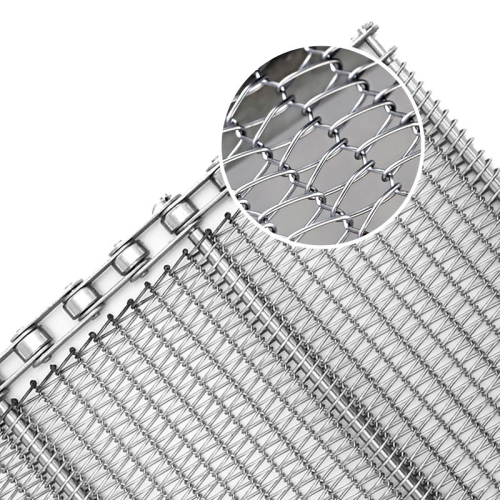
Stainless steel conveyor belts made from Grade 304 and Grade 316 stainless steel are engineered for industries that demand corrosion resistance, hygiene, durability, and thermal stability. Whether used in food processing, chemical plants, pharmaceuticals, or heat-treatment lines, these belts deliver consistent performance under extreme environments.
Built with precision weaving and advanced metallurgy, our stainless steel belts offer long operational life, low maintenance, and optimized throughput for modern industrial systems.
Premium 304 and 316 stainless steel conveyor belts for food processing, pharmaceuticals, baking, freezing, and corrosive environments. Custom wire mesh, balanced weave, and flat flex designs with superior corrosion resistance, high-temperature performance, and easy sanitation. Get durable, hygienic material handling solutions today.
Why Stainless Steel Conveyor Belts Outperform Other Materials
Industries worldwide choose stainless steel wire mesh conveyor belts for their ability to withstand extreme conditions while meeting strict hygiene standards. Unlike fabric or plastic belts, these metal belts resist abrasion, high temperatures, and aggressive cleaning chemicals without degrading.
Grade 304 offers excellent all-around performance for standard operations, while grade 316 excels in chloride-rich or acidic settings thanks to added molybdenum. Both grades support FDA-compliant food contact and deliver years of low-maintenance service.
Key Advantages of 304/316 Stainless Steel Belts
- Superior Corrosion Resistance — Withstands moisture, acids, and salts that quickly damage other metals.
- High-Temperature Capability — Handles continuous use from -40°C freezing lines to 800°C+ baking ovens.
- Easy Sanitation — Smooth surfaces and open mesh allow rapid wash-down with no hidden bacteria traps.
- Custom Engineering — Tailored widths, pitches, wire diameters, and edge styles fit any conveyor frame.
- Cost-Effective Longevity — Lower replacement frequency offsets initial investment.
304 vs 316 Stainless Steel Conveyor Belts: Choosing the Right Grade
Understanding the chemistry behind each grade helps you match the belt to your exact operating conditions.
Chemical Composition and Performance Differences
304 Stainless Steel contains 18% chromium and 8% nickel. It provides robust oxidation resistance and remains the most popular choice for general food processing and indoor manufacturing.
316 Stainless Steel adds 2–3% molybdenum plus higher nickel content. This upgrade dramatically improves resistance to pitting and crevice corrosion—ideal for saltwater brines, acidic marinades, or frequent exposure to aggressive sanitizers.
Feature | 304 Grade | 316 Grade |
Corrosion Resistance | Excellent for most environments | Superior in chloride & acid settings |
Cost | Lower | 20–40% higher |
Max Operating Temp | Up to 870°C | Up to 800°C (still excellent) |
Best For | Dry goods, general packaging | Wet, salty, or chemical-heavy lines |
Food-Grade Suitability | FDA approved | FDA approved + marine-grade |
When to Choose 304 Stainless Steel Conveyor Belts
Select 304 for cost-sensitive applications such as:
- Bread and bakery cooling lines
- Vegetable washing and drying
- Pharmaceutical tablet conveying
- Packaging and bottling lines
When 316 Stainless Steel Is the Better Investment
Upgrade to 316 when your process involves:
- Seafood or cheese production (high salt content)
- Pickling or marinating lines
- Clean-in-place (CIP) systems with strong acids/alkalis
- Coastal facilities or outdoor exposure
Common Types of Stainless Steel Wire Mesh Conveyor Belts
Manufacturers offer multiple weave styles in both 304 and 316 to match load, airflow, and product size requirements.
Balanced Weave and Compound Balanced Belts
These tightly woven designs provide a flat carrying surface with excellent strength-to-weight ratio. Perfect for small products, heavy loads, or high-speed operations.
Flat Flex and Flat Wire Belts
Open structure maximizes airflow for rapid cooling or freezing. Easy to splice and repair on-site.
Spiral and Chain-Driven Mesh Belts
Self-stacking spiral belts suit continuous frying or proofing lines. Positive chain drive prevents slippage on inclines or under heavy tension.
Eye-Link and Rod Conveyor Belts
Extra-rigid construction for extreme temperatures or abrasive materials like glass or ceramics.
All types are available with Teflon coating, welded edges, or side guards for specialized needs.
Industrial Applications of 304/316 Stainless Steel Conveyor Systems
These belts power critical processes across multiple sectors:
- Food Processing — Freezing, baking, frying, cooling, washing, and packaging lines
- Pharmaceuticals & Cosmetics — Sterile tablet and bottle conveying
- Automotive & Electronics — Heat-treatment and parts washing
- Textiles & Printing — Dyeing and drying ovens
- Chemical & Waste Treatment — Corrosive material handling
Whether you need a 1-meter-wide cooling belt or a 3-meter spiral system, 304/316 stainless steel adapts seamlessly.
Technical Specifications and Customization Options
Standard specifications include:
- Wire diameters: 1.0 mm to 5.0 mm
- Mesh openings: 1 mm × 1 mm up to 50 mm × 50 mm
- Belt widths: 200 mm to 3,000 mm+
- Operating temperatures: -40°C to 1,100°C (depending on alloy)
Customization covers:
- Side chains or guard rails
- Flights and cleats for inclines
- Variable pitch for product-specific flow
- Polished or matte finishes for ultra-sanitary lines
Maintenance and Cleaning Best Practices
Proper care extends belt life dramatically:
- Daily visual inspection for wire fatigue or debris buildup.
- High-pressure rinse with approved sanitizers—no harsh abrasives needed.
- Lubricate drive components only; the belt itself is self-lubricating in most cases.
- Store spare sections flat to prevent distortion.
Routine maintenance keeps downtime near zero and preserves your investment.
How to Select the Perfect Stainless Steel Conveyor Belt for Your Operation
Start by answering these questions:
- What products will travel on the belt?
- What temperature and chemical exposure will it face?
- What are your speed, load, and width requirements?
- Do you need FDA or 3-A dairy certification?
Our engineering team reviews your drawings and process data to recommend the optimal 304 or 316 grade, weave style, and drive system—delivering a belt that performs flawlessly from day one.
Get High-Quality Stainless Steel Conveyor Belts 304/316
Enhance your production efficiency with durable and corrosion-resistant conveyor solutions tailored to your needs.
Request Custom Belt Design