Metal Wire Mesh Conveyor Belts — Stainless Steel & Carbon Steel
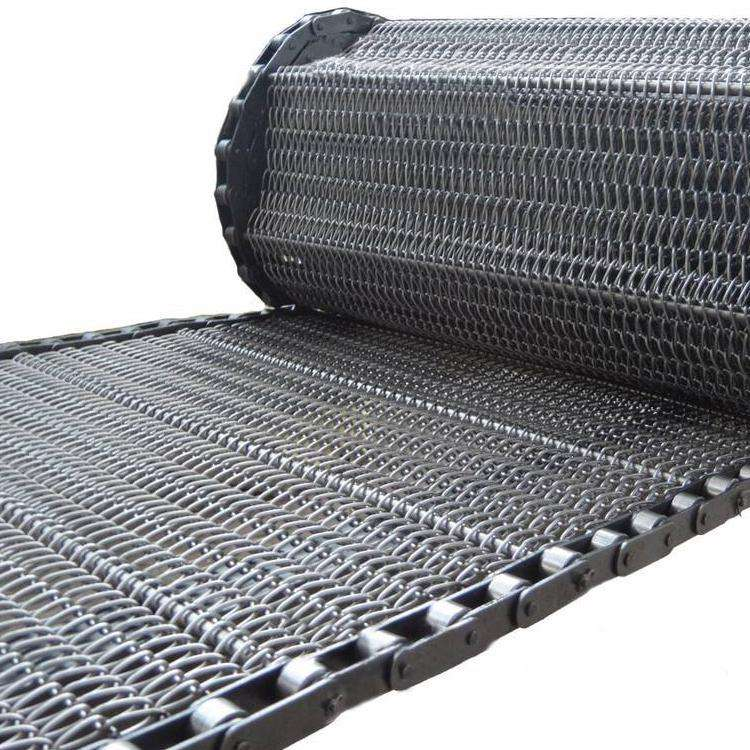
EngineersWireMesh designs and manufactures metal wire mesh conveyor belts for high-temperature ovens, freezer tunnels, dryers and precision cooling lines. Available in stainless steel (304/316L), high-carbon and alloy steels, our belts are custom-engineered for width, weave and edge style to meet process, load and airflow requirements
Engineered for performance and endurance in demanding industrial environments, our Metal Wire Mesh Belt delivers unmatched reliability for precision-driven applications. This advanced conveyor solution is crafted from high-grade stainless steel, galvanized steel, or custom alloys tailored to your thermal, tensile, and corrosion resistance requirements.
Metal Wire Mesh Belt is formed with a single side chain formed by intertwining and shaping of wires. Metal Wire Mesh belts are made of various metal alloys depending on the applications or conditions they are going to be used.
Metal Wire Mesh Belt are used in worldwide industries such as food processing, baking, extremely high temperatures, forging, ceramics, glass, heat treating, automotive; metal wire mesh belts are also used in different industrial applications and sectors such as architecture, mechanical, metallurgy, wood, pharmaceutical, metal and ecology recycling, water treatment etc.
Why Choose Metal Wire Mesh Belts?
Metal wire mesh conveyor belts are preferred in demanding industrial processes because they combine strength, airflow, and durability. Compared to solid or plastic belts, they offer unique engineering benefits:
- High Temperature Resistance— Stainless steel and alloy wire mesh belts withstand continuous operation in ovens, dryers, and heat-treatment lines up to 600°C (depending on alloy).
- Excellent Airflow & Drainage— Open mesh structure allows uniform heating, cooling, washing, or drying of products, improving process efficiency.
- Durability & Long Service Life— Precision-woven wires resist deformation, wear, and corrosion for extended belt life and reduced downtime.
- Hygienic & Easy to Clean— Smooth, open surfaces support CIP (clean-in-place) systems, ideal for food processing and pharmaceutical environments.
- Versatility of Design— Available in balanced weave, flat-wire, spiral, and chain-edge styles to suit specific load, width, and application requirements.
- Custom Material Options— Manufactured in SS304, SS316L, carbon steel, or special alloys depending on chemical resistance, mechanical load, or sanitary needs.
- Stable, Straight Running— Balanced weave and sprocket-driven designs minimize tracking issues and ensure consistent conveying.
Types of Metal Wire Mesh Conveyor Belts
Different industrial processes require different belt constructions. Below are the most widely used metal wire mesh conveyor belt types:
1. Balanced Weave Belts (Balanced Spiral)
Construction: Alternating left- and right-hand spirals connected with crimped rods.
Benefits: Straight running, strong yet flexible, reduced tracking issues.
Applications: Freezer tunnels, bakery ovens, heat treatment, general conveying.
2. Compound Balanced Weave Belts
Construction: Double spirals with connecting rods for tighter mesh.
Benefits: Small openings, excellent for carrying fine or small products.
Applications: Baking crackers, biscuits, small parts, heat treatment of fine materials.
3. Flat Wire Conveyor Belts (Flat-Flex Belts)
Construction: Formed flat strips connected with cross rods.
Benefits: Large open area (up to ~86%), smooth surface, positive drive.
Applications: Bakery ovens, cooling, frying, parts washing, drying.
4. Spiral Wire Mesh Belts (Chain-Link Belts)
Construction: Interlinked spirals with straight cross rods, simple design.
Benefits: Economical, lightweight, easy installation.
Applications: General conveying, washing, drying, light-duty processing.
5. Rod Network Belts (Grid / Eye-Link Belts)
Construction: Cross rods connected with eye links or welded.
Benefits: Very strong, flat conveying surface, handles heavy loads.
Applications: Heavy-duty conveying, quenching, foundry, automotive parts.
6. Specialty Mesh Belts
Options: Ladder belts, Z-belts, woven slat belts, perforated plate belts.
Benefits: Tailored to niche processes (high drainage, special airflow, unique product support).
Applications: Snack food frying, special chemical processes, packaging lines.
Materials, Metallurgy & Coatings for Metal Wire Mesh Belts
The performance and service life of a metal wire mesh conveyor belt depend heavily on the material selected. Engineers choose different alloys and surface treatments depending on operating temperature, corrosion resistance, and mechanical load.
Stainless Steel Grades (Most Common)
SS304 (AISI 304):
Excellent corrosion resistance in most industrial and food applications.
Withstands continuous service up to ~450–500°C.
Widely used in bakery ovens, general food processing, and washing lines.
Stainless steel wire mesh belt (SS304).
SS316L (AISI 316L):
Added molybdenum provides superior resistance against chlorides, acids, and saline environments.
Ideal for seafood processing, chemical handling, and harsh CIP cleaning systems.
Extended lifespan compared to SS304 in aggressive conditions.
Stainless steel conveyor belt (SS316L).
High Carbon Steel
Higher tensile strength compared to stainless.
Suitable for heavy-duty, high-load applications where corrosion is less critical.
Typically used in heat-treatment furnaces, quenching, and metal parts processing.
More economical but requires protective coatings if corrosion is a factor.
Galvanized Steel
Carbon steel base with zinc coating for mild corrosion resistance.
Cost-effective option for general conveying at moderate temperatures.
Not recommended for food contact or high-temperature applications (zinc coating degrades >200°C).
Nickel & Specialty Alloys
Inconel, Hastelloy, Nichrome available for extreme conditions.
Withstand temperatures above 1000°C, resist oxidation and scaling.
Used in aerospace, metallurgical furnaces, and chemical processing where standard steels fail.
High temperature wire mesh belt, nickel alloy conveyor belt.
Surface Treatments & Coatings
Passivation: Improves stainless steel corrosion resistance (food grade finish).
Polishing: Smooth surface finish for reduced product contamination.
Protective Coatings: Zinc, Teflon, or ceramic coatings can be applied for specialized processes (non-stick, low-friction, corrosion protection).
Key Technical Specs to Know – Metal Wire Mesh Belts
Optimized Architecture for Efficiency and Load Distribution: Each belt features a meticulously designed interlaced wire mesh configuration—balanced weave, compound weave, or flat-flex—to enhance airflow, support uniform heat distribution, and minimize belt fatigue. The open surface area is optimized (ranging from 30% to 85%) based on application-specific throughput, ensuring ideal support for drying, washing, baking, cooling, and sintering operations.
High-Precision Construction for Dimensional Stability: Manufactured with CNC-calibrated machinery, our mesh belts maintain consistent pitch, edge straightness, and flatness tolerances within ±0.1mm. This precision is crucial for synchronizing with sprockets and drive chains, reducing friction losses and mitigating mechanical stress over long cycles.
Modular and Retrofit-Ready: Designed to integrate seamlessly with existing conveyor systems, the belts are available in custom widths (up to 3000mm), loop edge or welded edge styles, and multiple wire gauges (1.2mm to 5mm). Optional side guards, chain attachments, and flights allow for vertical conveyance, bulk material retention, or step-wise indexing.
Thermal and Mechanical Performance:
Operating temperature range: -80°C to 1200°C
Tensile strength: Up to 1200 MPa (material-dependent)
Load capacity: Up to 800 kg/m²
Elongation at break: <1% under recommended load
Built to perform in furnaces, food processing lines, powder metallurgy, and chemical treatment tunnels, our wire mesh belts endure extreme conditions without deformation, elongation, or loss of structural integrity.
Use Cases:
Continuous baking ovens (food-grade SS)
High-temperature sintering lines
Glass tempering and annealing conveyors
Chemical exposure transport systems
Bulk granular cooling tunnels
Technical specification table
Parameter | Typical range / note |
Materials | SS 304, SS 316L, High carbon steel, Galvanized, Alloy steels. |
Mesh types | Balanced weave, compound balanced, flat-wire, spiral/balanced spiral. |
Wire diameter (spiral/flat) | 0.8 mm — 6.0 mm (varies by mesh style & load) — specify exact model wire diameter |
Open area (%) | 30% — 86% depending on weave; Flat-Flex belts advertise up to ~86% open area. |
Max operating temp | Stainless steel belts typically up to 600°C (depends on alloy); carbon/higher alloy vary. (specify per alloy). |
Max belt width | Up to 3000 mm (custom) — verify with factory for wider. |
Typical tensile rating | Provide per-belt datasheet (N/mm) |
Edge styles | Loop edge, chain edge, sprocket tooth edge, plain roller edge |
Surface finish | Mill, polished, passivated (for food grade) |
Certifications | Material test certs (MTC), ISO manufacturing process (if available) |
Common Applications of Metal Wire Mesh Conveyor Belts
Metal wire mesh belts are widely used across industries where strength, heat resistance, hygiene, and durability are critical. Below are the most common applications:
- Food Processing & Baking
- Oven conveyors for biscuits, breads, and pizza
- Freezing tunnels for seafood, meat, and vegetables
- Washing, blanching, and drying lines
- Heat Treatment & Metallurgy
- High-temperature furnaces
- Quenching, sintering, and brazing processes
- Conveyors for castings, forgings, and powder metallurgy
- Chemical & Pharmaceutical Industry
- Acid- and alkali-resistant conveyors
- Drying tunnels for powders, tablets, and chemicals
- Clean-in-place (CIP) compatible conveyors
- Glass, Ceramics & Building Materials
- Annealing furnaces for glassware
- Ceramic tile kilns
- Brick and refractory drying lines
- Automotive & Aerospace
- Conveying precision components through heat treatment
- Exhaust system parts, fasteners, gears, and aerospace alloys
- Nickel alloy mesh belts for high-temperature applications
- General Industrial Applications
- Packaging lines
- Powder coating systems
- Bulk material handling
Case Studies: Real-World Performance of Metal Wire Mesh Belts
Case Study 1 – Food Processing Line
A global bakery chain replaced conventional flat belts with stainless steel wire mesh belts (SS304).
Result: 25% reduction in downtime due to easier cleaning and improved product release.
Trusted Wire Mesh Conveyor Belt Manufacturer
Engineered for smooth operation and minimal maintenance, our conveyor belts deliver consistent performance even in demanding environments. Let’s optimize your workflow.
Get Custom Solution